
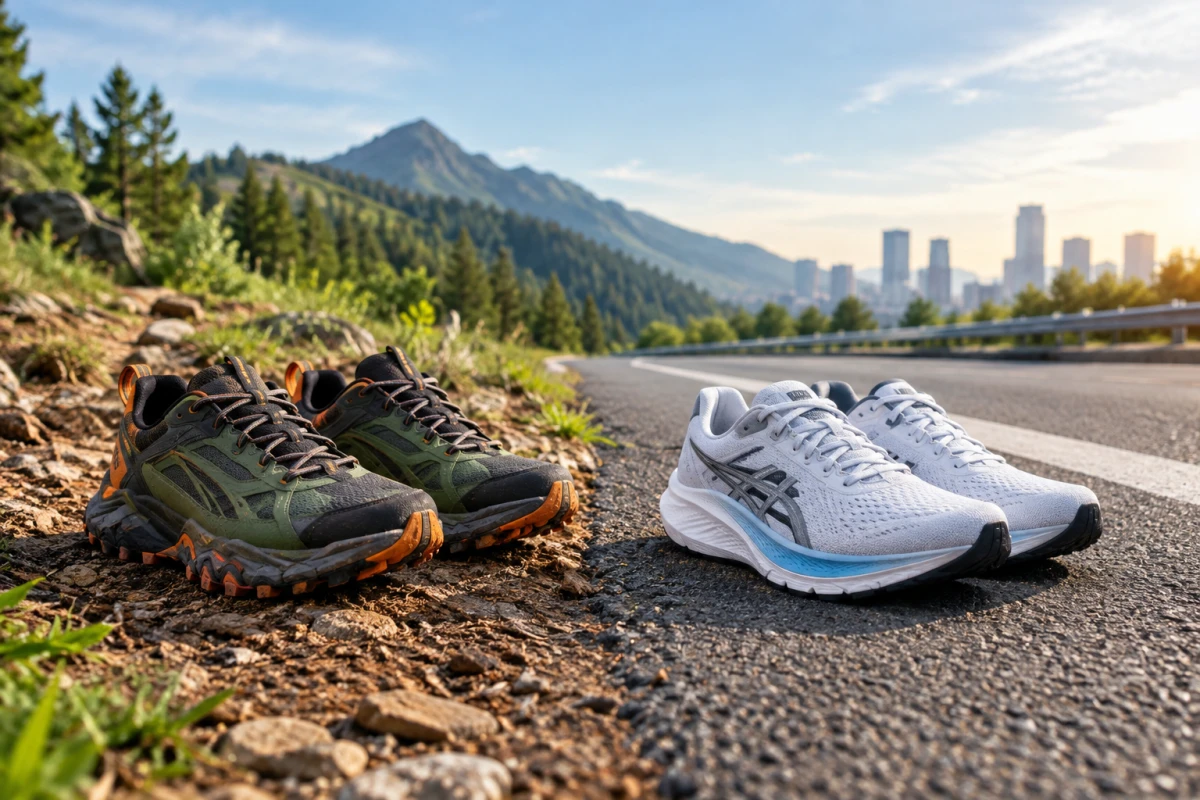
Trail and road running shoes are built for different terrain. Compare outsoles, cushioning, and weight, then choose the right pair for pavement or dirt trails.
Running on asphalt and running on a trail call for different shoes. Some runners wear one pair for every surface, but that choice affects comfort, safety, and how long the shoes last. That is why it helps to understand the difference between trail and road running shoes before you buy.
Interest in trail running is growing. A writer at T3 says 2026 trail shoes look sleeker and perform on par with road shoes. Many major brands now have trail lines, including Nike, Hoka, Brooks, Salomon, and Altra.
This article breaks down the differences between the two types and explains how to choose by terrain. The information is compiled from shoe brand guides and recent running media.
Key Differences Between Trail and Road Shoes
The most visible difference is the outsole. Trail shoes have lugs, which are rubber studs that grip soil, mud, and rock. Road shoes have a smoother sole for a seamless ride on pavement. Trail shoe rubber also tends to be softer, while road shoe rubber is harder and resists wear.
Cushioning differs too. Road shoes are designed to absorb impact on hard surfaces like asphalt. Trail shoes usually have a firmer midsole, which makes them more stable on uneven ground. This added protection generally makes trail shoes heavier.
The upper is different as well. A trail shoe’s upper is thicker and has protective overlays, and many models also have a toe guard. Some models use a gusseted tongue and tightly woven mesh to keep out debris. Road shoes use a lightweight, flexible upper that stays cooler.
As for fit, trail shoes usually hold the foot more snugly for better control on technical trails, while road shoes typically leave more room for the toes. The table below summarizes the differences.
| Aspect | Trail Shoes | Road Running Shoes |
|---|---|---|
| Outsole | Aggressive lugs, soft rubber | Smooth sole, hard rubber |
| Cushioning | Firmer and more stable | Softer, absorbs impact |
| Upper | Thick, with overlays and toe guard | Thin, light, breathable |
| Weight | Heavier | Lighter |
| Fit | Snug | Roomier |
| Terrain | Dirt, mud, rock, roots | Asphalt, sidewalks, treadmills |
Choosing Shoes for Your Running Terrain
For asphalt, sidewalks, and treadmills, choose road shoes. Their hard rubber lasts longer on hard surfaces, and they are built specifically for roads and treadmills. Nike notes that hard pavement gradually wears down the soft soles of trail shoes. Running on roads also shortens the life of trail shoes.
For wet ground, roots, rock, and mud, trail running shoes are the safer choice. Aggressive lugs give reliable grip in mud, sand, and soil. Alexandra Sports recommends trail shoes for runners who spend more than 10 percent of their time off paved surfaces.
Routes that mix asphalt with packed dirt trails call for hybrid shoes. Fleet Feet says road-to-trail shoes combine a road shoe upper with a light trail outsole. Salomon cautions that this type is less aggressive on steep climbs and technical descents. Adidas considers road shoes suitable only for light trails.
Many athletes keep three pairs: one for road training, one for trails, and one for racing. Road marathoners should wear road shoes for both training and races, which helps the feet get used to the same shoe.