
SEAMEO SEAMOLEC and the ICE Institute Consortium held a regional policy dialogue on micro-credentials in Jakarta on June 8, 2026. Katadata reports that Ministerial Regulation No. 39 of 2025, amended by No. 10 of 2026, governs quality assurance in higher education. An opinion writer at Katadata argues that recognition should be designed from the start together with universities, industry, and professional associations.
The challenges include the pace of technological change, unequal access to education, and affordability. For this reason, you should choose a provider carefully. Universities, established platforms such as Coursera and edX, and large companies such as Google and Microsoft are considered safer choices.
How to Choose the Right One for Your Career
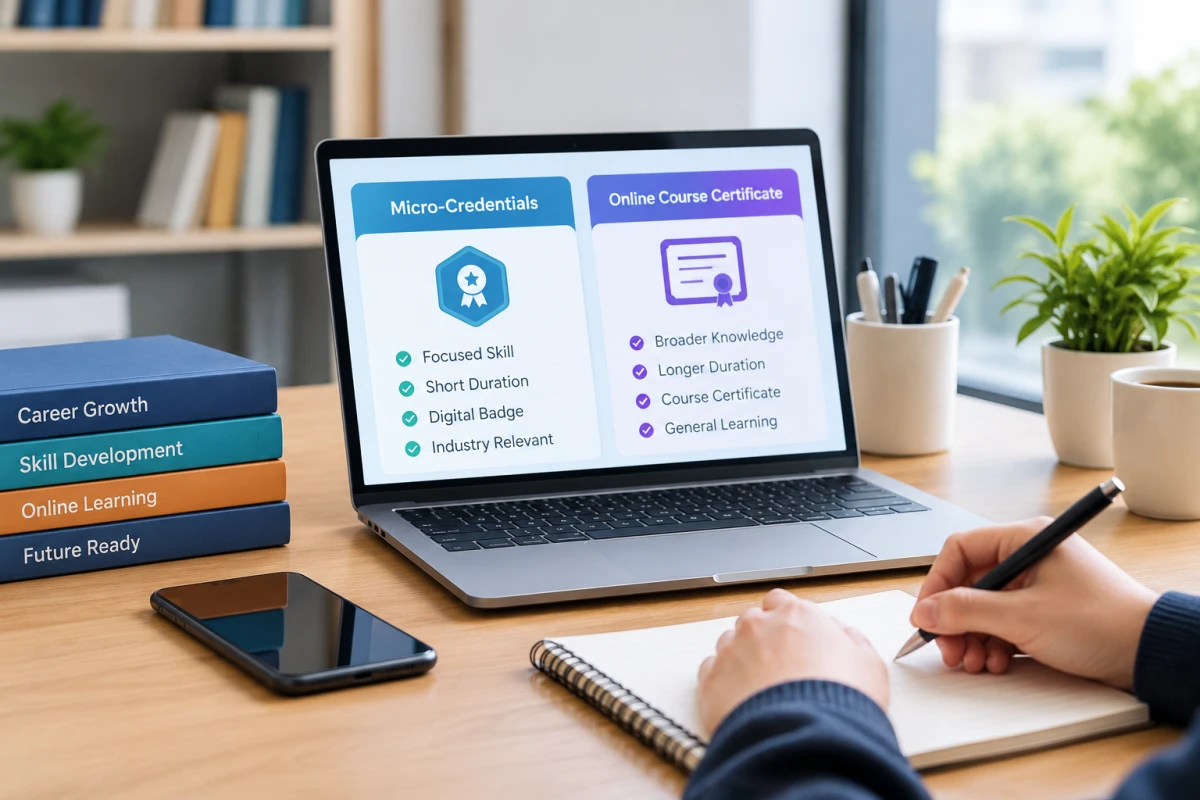
Start with your goal. If you want to switch careers or apply for a specific position, choose micro-credentials with real assessments and projects. If you only want an introduction to a new field, a regular online course certificate is enough.
Check four things before you pay:
- Issuer: a university, a major platform, or a company known in the industry.
- Assessment: a graded exam or project, not just watching videos.
- Verification: a digital credential that employers can check through a link.
- Credit: whether a university may recognize it as academic credit units (SKS).
Employers assess skills through work tests, simulations, competency-based interviews, and work samples. So keep a portfolio of every project you complete, and add the link to your digital credential on your CV and LinkedIn.
Choose a credential that matches the job you are aiming for. Make sure it includes assessments, projects, and digital verification. In the comparison of micro-credentials vs. online course certificates, these requirements decide which one is more relevant to your career.
Get the latest information and more useful articles at bacatulisan.com